Hooked at Midnight: The Sneaky Science Behind Streaming's Never-Ending Loop
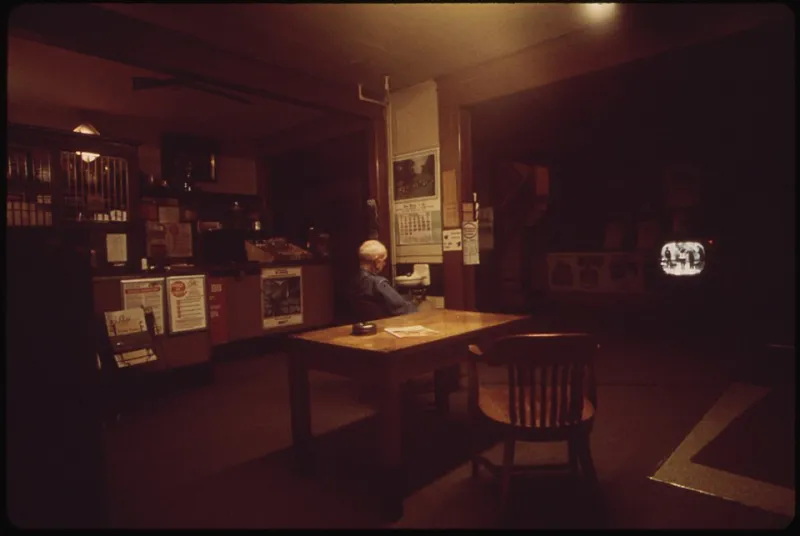
Photo: David Hiser, Public domain, via Wikimedia Commons
It starts innocently enough. You tell yourself one episode before bed — maybe forty minutes, maybe less if you skip the recap. Then the credits roll, the screen dims for exactly three seconds, and the next episode is already loading. Before you've even processed what just happened, you're committed again. Suddenly it's 1:47 AM and your alarm is set for six.
Welcome to the midnight algorithm — a finely tuned, deeply intentional machine built by some of the sharpest engineers and behavioral scientists in Silicon Valley. And it runs 24/7, just like your entertainment should.
The Autoplay Trap Is More Calculated Than You Think
Autoplay feels like a convenience feature. In reality, it's a psychological lever. Netflix, Hulu, Max, and their competitors didn't stumble onto the idea of automatically rolling into the next episode — they A/B tested their way to a very specific countdown timer length that minimizes the moment of decision-making.
That pause between episodes? It's short enough that your brain doesn't fully disengage, but long enough to give you the illusion of choice. Media psychologist Dr. Amanda Lore, who consults for digital wellness organizations, puts it plainly: "The opt-out model is fundamentally different from the opt-in model. When you have to actively choose to stop, you're fighting against momentum. Most people don't fight momentum at midnight."
Netflix famously acknowledged in a 2017 earnings letter that their biggest competitor wasn't HBO or Hulu — it was sleep. That statement wasn't a joke. It was a mission statement.
Cliffhangers Aren't Just Good Storytelling
Sure, a well-placed cliffhanger is a mark of quality writing. But streaming platforms have taken the art of the episode break and turned it into a data-driven science. Unlike traditional network TV, where episode endings were shaped partly by commercial break requirements and weekly scheduling, streaming shows are built to be consumed in blocks. Writers' rooms on major platform productions often receive notes specifically about ending episodes at unresolved moments.
The result? Shows structured almost like slot machines — each pull (or episode) ends just before the payoff, keeping viewers in a state of anticipatory tension that's genuinely hard to walk away from. That tension spikes during late-night hours, when your prefrontal cortex — the part of your brain responsible for self-regulation — is running at reduced capacity because you're tired.
"Fatigue lowers your resistance to immediate reward," says behavioral researcher Marcus Tan, who has studied media consumption patterns. "You know you should sleep. But the reward of finding out what happens next feels more immediate than the abstract benefit of rest. Streaming platforms are essentially exploiting a tired brain."
Your Recommendations Know What Time It Is
Here's where it gets genuinely wild. Streaming recommendation engines don't just know what you like — they know when you watch and adjust their suggestions accordingly. The shows surfaced to you at 11 PM on a Tuesday are not the same ones the algorithm would serve up at 3 PM on a Saturday.
Late-night viewers tend to respond differently to content. According to industry data, binge-completion rates are highest between 10 PM and 2 AM. Platforms have noticed. During those hours, algorithms are more likely to push serialized dramas with strong narrative hooks, psychological thrillers, and true crime content — genres that reward continued watching rather than episodic shows you can comfortably drop after one.
Spotify does something similar with its late-night playlist curation. YouTube's recommendation engine shifts toward longer-form content as the clock pushes past midnight. The entire ecosystem is designed to meet you in your most vulnerable viewing state and keep you there.
The Interface Is Working Against Your Bedtime Too
It's not just content strategy — it's design. The dark mode UI that most streaming apps default to at night isn't just easy on the eyes; it reduces visual cues that signal "daytime activity." Bright screens and bold interfaces feel active and purposeful. Dark, immersive ones feel like you've already settled in, already committed.
Progress bars are another quiet piece of the puzzle. Seeing that you're 73% through an episode makes stopping feel like leaving money on the table. Completionist psychology — the same thing that makes you want to finish a bag of chips even when you're full — kicks in hard. And once you finish that episode, the algorithm already knows you finished it, which signals high engagement and triggers an even more targeted next recommendation.
Is Any of This Actually Bad?
Here's where we pump the brakes a little. The platforms aren't villains. They're businesses, and keeping you engaged is literally their job. And honestly? Some of the best television experiences of the past decade happened because someone got sucked into a show they couldn't put down. There's real joy in that.
But awareness matters. Knowing that the three-second autoplay countdown is a deliberate design choice — not a neutral feature — gives you the power to opt out more consciously. Most platforms let you turn autoplay off entirely, though they don't exactly put that setting front and center.
The sleep deprivation side of this conversation is real too. The CDC has consistently flagged insufficient sleep as a public health issue, and late-night screen time is a documented contributor. None of that is the streaming platform's problem to solve — but it's yours to manage.
Watch Smart, Watch Late
At Piwi247, we're not here to tell you to go to bed. Honestly, some of the best watching happens when the rest of the house is quiet and it's just you and the glow of a screen. But knowing how the machine works makes you a smarter viewer.
Set a timer. Disable autoplay on nights when you have early mornings. Be intentional about which shows you start after 10 PM — because the algorithm already knows which ones you won't be able to stop. And if you do end up four episodes deep at 2 AM? At least now you know exactly who's responsible.
Hint: it's both of you.