The Audience Took the Wheel: How Everyday Viewers Are Now Calling the Shots in Hollywood
Not long ago, the entertainment industry had a pretty clean power structure. Studios greenlit projects. Networks scheduled them. Critics reviewed them. Audiences watched — or didn't — and the numbers told the story. The audience's job was to consume. The industry's job was to decide.
That structure is gone. And it's not coming back.
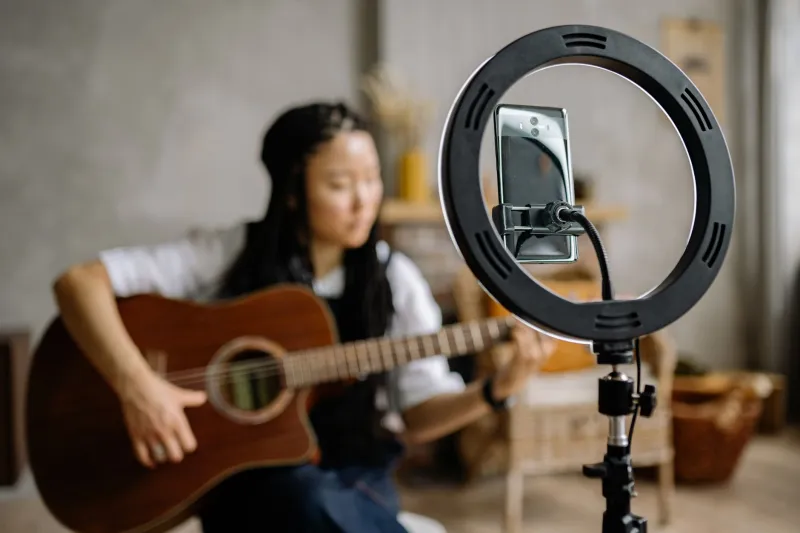
Today, the most powerful force shaping what gets made, renewed, canceled, or culturally crowned isn't a network executive or a Rotten Tomatoes score. It's a 24-year-old with a ring light and a passionate opinion — and the community of 800,000 people who follow them.
Welcome to the era of the audience as gatekeeper.
From Passive to Participant
The shift didn't happen overnight. It started with early fan forums and petitions — remember when fans mailed nuts to NBC to save Chuck, or wrote letters to bring back Jericho? Those were the crude early signals that audiences weren't content to just accept what they were given.
But social media turbocharged that impulse into something unrecognizable. TikTok, in particular, changed the math entirely. A single video breaking down a show's hidden lore can rack up 10 million views in 48 hours. A creator's passionate argument for why a canceled series deserved better can generate enough noise to make a streaming platform blink. This isn't theoretical — it's happened repeatedly, and the industry has started paying close attention.
When Netflix canceled One Day at a Time in 2019, fan outcry was so sustained and organized that Pop TV picked it up. When Manifest was dropped by NBC after three seasons, a coordinated fan campaign on social media — complete with trending hashtags and coordinated review-bombing of Netflix's suggestion algorithms — contributed to Netflix eventually reviving the show for a final season. Audiences didn't just protest. They strategized.
TikTok Is the New Pilot Season
If you want to understand how a show becomes a cultural phenomenon in 2024, don't look at the premiere date. Look at TikTok six weeks before it.
Streaming platforms have learned to read TikTok the way old Hollywood read Variety. A show that's generating organic fan edits, character analysis videos, and "you have to watch this" recommendation clips before it even drops is already a hit. The platform has become the industry's most accurate cultural thermometer — and savvy studios are leaning into it hard.
HBO's marketing team monitored TikTok discourse around The Last of Us obsessively during its first season. When specific moments or characters started generating outsized engagement, that fed directly into how they promoted subsequent episodes. The audience wasn't just reacting — they were, in effect, co-producing the cultural rollout.
For smaller shows without massive marketing budgets, TikTok virality isn't just helpful — it's existential. Emily in Paris was dismissed by critics on arrival but became a streaming juggernaut because viewers on social media decided it was their thing, irony and all. No amount of critical consensus could have manufactured that.
Discord: The War Room Nobody Talks About
While TikTok gets most of the credit, Discord communities are doing some of the heaviest lifting in terms of organized audience influence.
Fan servers for major shows often function like distributed think tanks. They break down trailers frame by frame before release. They coordinate watch parties that spike streaming numbers in ways that platforms notice. They organize letter-writing campaigns, petition drives, and social media blitzes with the kind of tactical precision that would impress a political campaign manager.
When Lucifer fans wanted a final season after Fox canceled it, the Discord-and-Twitter coordination that followed was disciplined enough to get Netflix to take the show for three more seasons. When the Snyder Cut of Justice League seemed like a pipe dream, an online coalition turned it into a years-long pressure campaign that eventually forced Warner Bros. to release a four-hour director's cut. These weren't flukes. They were organized, sustained, and effective.
Casting Is No Longer a Closed Room
The audience's influence doesn't stop at renewal campaigns. It's now reaching into pre-production decisions that used to be entirely behind closed doors.
Fan casting — the practice of audiences publicly lobbying for specific actors to play specific roles — has gone from wishful Twitter content to a legitimate industry signal. When Sony was developing its Spider-Man universe, fan pressure around Miles Morales representation shaped conversations about the animated film that became Into the Spider-Verse. Casting announcements for major franchise roles now routinely trigger massive public reactions that studios actively monitor before any contracts are signed.
This doesn't mean studios are simply doing whatever fans say. But the days of a casting decision existing in a vacuum, announced and accepted, are over. Every major choice now enters a public conversation immediately — and that conversation has real weight.
The Flip Side: When the Crowd Gets It Wrong
This power shift isn't without complications. The same organized audience energy that saved beloved shows has also been weaponized in ugly ways. Harassment campaigns targeting actors, writers, or showrunners who made choices fans disliked are a real and serious problem. The line between passionate advocacy and toxic entitlement gets crossed regularly, and the people on the receiving end — often women and people of color in prominent creative roles — pay a real personal cost.
There's also the question of whether fan-driven decisions actually make for better content. Some of the most creatively ambitious television — the kind that challenges, alienates, and ultimately rewards — requires creative teams to make choices their audience doesn't immediately understand. If every decision is filtered through the court of public opinion, does storytelling become safer, blander, and more fan-serviced by default?
It's a tension the industry hasn't resolved. And honestly, it probably can't be.
What This Means for the Always-On Viewer
For anyone plugged into a platform like Piwi247, where content is flowing around the clock, this power shift is actually good news. The shows that survive in this environment aren't just the ones with the biggest budgets or the most famous faces. They're the ones that connect — that give audiences something to talk about, dissect, debate, and champion.
You're not just a viewer anymore. Every reaction video you watch, every Discord thread you join, every TikTok you share about a show you love is a micro-vote in an ongoing election about what entertainment culture looks like.
Hollywood used to decide what mattered. Now it's watching to see what you decide.
And it's paying very close attention.