One Screen, Full Attention: The Quiet Revolution Happening in American Living Rooms
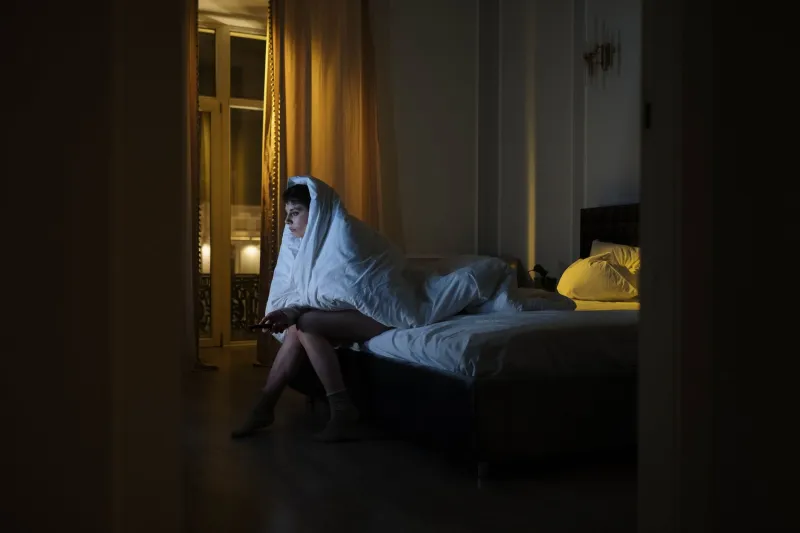
Somewhere between the third season of a prestige drama and the fifteenth notification from a group chat, something snapped. Americans — chronically online, perpetually distracted, professionally multitasking — started putting their phones face-down. And leaving them there.
The second screen habit, that very 2015 behavior of scrolling Instagram while half-watching a show, is quietly dying. And honestly? Good riddance.
What Even Was the Second Screen Era?
For the better part of a decade, the second screen was treated like an upgrade. Watching a big awards show? You needed Twitter open. Catching a live sports event? Reddit threads were basically mandatory. The idea was that layering devices made the experience richer — more social, more informed, more connected.
Streaming platforms leaned into it. Networks built companion apps. Brands paid good money for "second screen activations" during major broadcasts. The whole entertainment industry quietly accepted that viewers' attention was always going to be split, and designed content accordingly — bigger hooks, louder music cues, cliffhangers every eight minutes just to keep people from drifting entirely into their phone screens.
But something shifted. Slowly, then all at once.
The Exhaustion Factor Is Real
Dr. Gloria Tran, a cognitive attention researcher at a behavioral science institute in Chicago, puts it plainly: "The brain isn't wired to genuinely multitask. What we were all doing was rapid task-switching, and that has a real neurological cost. People got tired. They just didn't have language for it yet."
That cost showed up in a pretty specific way — people started noticing they'd finish a two-hour movie and remember almost nothing about it. They'd get to the finale of a show they'd been watching for weeks and realize they'd missed half the plot because they were reading about the plot on Reddit while watching it. The experience felt hollow.
Streaming analytics firms have started picking up on behavioral signals that back this up. Rewatch rates on certain prestige dramas have spiked, but not because viewers loved the show — it's because they watched it distracted the first time and needed to fill in the gaps. Some platforms are reportedly tracking "comprehension drop-off" as a metric now, correlating it with engagement patterns that suggest divided attention.
The data isn't pretty for the multitasking crowd.
When Watching Becomes a Statement
Here's the part that gets genuinely interesting: devoted, single-screen viewing is starting to carry social weight. There's a growing contingent of viewers — particularly in the 25-to-40 demographic — who treat watching something without their phone as a deliberate act. A luxury, even.
"I told my friends I watched the whole first season of a show in one weekend, no phone, no laptop, just me and the TV," one Chicago-based marketing manager told us. "They looked at me like I'd gone on a silent retreat. It kind of felt like that."
That framing — focused watching as a form of self-care or intentional living — is gaining traction in the same cultural spaces where things like digital detoxes and analog hobbies have found their audiences. It's less about being anti-technology and more about being deliberate with attention. In a world where everyone is always half-present, giving a show your full focus has become, weirdly, a flex.
Some streaming communities on platforms like Discord and dedicated fan forums are even organizing "clean watch" events — group viewings where participants commit to no second-screening and then discuss afterward. The format has more in common with a book club than a live-tweet session.
What This Means for the Platforms
If the audience is changing, the content has to follow. And there are early signs that it already is.
Shows designed for the fractured-attention era had to be loud — visually, narratively, emotionally — because they were always competing with whatever was happening on the second screen. But a viewer who's fully locked in doesn't need to be bludgeoned with exposition or startled by a needle-drop every ten minutes. They can handle quieter storytelling. Slower pacing. Ambiguity.
Some streaming insiders point to the renewed interest in slower, more atmospheric prestige television as a response to this shift. When a show trusts that its audience is actually watching, it can ask more of them.
For platforms like the ones that power always-on entertainment ecosystems, the implications run even deeper. If undivided attention is the new premium, then the design of the viewing experience itself becomes a competitive advantage. Fewer interruptions. Smarter autoplay logic. Interfaces that don't pull viewers out of the moment to remind them of seventeen other things they could be watching instead.
The 24/7 streaming model has always been about keeping people engaged around the clock — but engagement looks different when it's deep instead of scattered.
The Dopamine Math Has Changed
Dr. Tran offers a useful framework for understanding why this shift is happening now, after years of second-screen dominance. "The dopamine hit from a notification or a social media scroll is small and fast," she explains. "The dopamine hit from genuine narrative immersion — from actually being inside a story — is bigger and lasts longer. People are starting to recognize the difference in how they feel afterward."
There's a reason people describe finishing a truly great show as feeling almost like coming up for air. That sensation — emotionally wrung out, satisfied, a little disoriented — only happens when you were actually in it. You can't get there while also monitoring your mentions.
And once viewers experience that kind of engagement a few times, the fragmented version starts to feel like settling.
The Living Room Is Getting Its Moment Back
None of this means the second screen is dead in every context. Live sports, reality competition shows, breaking news — these still drive genuine dual-screen behavior, and probably always will. The communal, real-time experience of those formats actually benefits from social media running alongside.
But for narrative content — scripted drama, prestige comedy, documentary series — the tide is turning. The living room, that space that was supposedly killed by the bedroom TV and then resurrected as a background-noise zone, is quietly reclaiming its status as a place of actual attention.
Americans spent years treating their entertainment like wallpaper. Now some of them are treating it like an event again. And the platforms smart enough to design for that shift are going to be the ones people actually remember watching.
The screen isn't getting smaller. The attention is just finally catching up to it.