Scheduled TV Is Back and People Are Genuinely Relieved About It
Somewhere between the 47th time you opened Netflix and closed it without watching anything, linear TV started looking pretty good again. Not in a nostalgic, "I miss the good old days" kind of way — but in a very real, very current sense. People are actively choosing scheduled programming again, and the numbers back it up.
It sounds counterintuitive. We fought so hard for the freedom to watch whatever we want, whenever we want. And now that we have it, a growing chunk of the audience is essentially handing the remote back. Voluntarily.
So what's actually going on here?
The Paradox of Too Many Choices
There's a well-documented psychological phenomenon called choice overload, and streaming platforms have essentially built their entire product around it — for better and for worse. When you sit down to watch something on a pure on-demand platform, you're not just picking a show. You're making a decision about your time, your mood, your attention span, and whether you're in a comedy headspace or a drama headspace or a true crime headspace. That's a lot of cognitive work before you've even pressed play.
Linear TV removes all of that friction. The channel is on. Something is playing. You can watch it or you can change the channel, but the default is already set for you. For a lot of people, that default is the whole point.
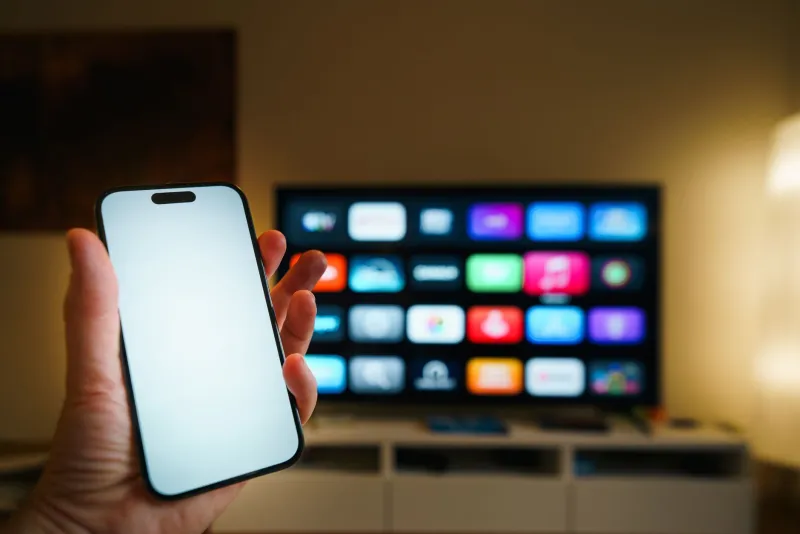
Services like Hulu Live TV and YouTube TV have quietly been capitalizing on exactly this dynamic. They're not selling cable in disguise — they're selling relief. The pitch is basically: we've already figured out what's on, you just show up.
Appointment Viewing Is Making a Real Comeback
Remember appointment viewing? The idea that you'd rearrange your Tuesday night around a specific show at a specific time? Streaming was supposed to kill that concept forever. And for a while, it did. But something interesting happened when everything became available all at once — the urgency disappeared, and so did a lot of the communal energy around TV.
When a show drops all at once on a streaming platform, the conversation window is maybe a week, two weeks tops. After that, spoilers are everywhere and the cultural moment has passed. But when a show airs weekly, on a schedule, that conversation stretches out for months. Every episode becomes an event.
Networks figured this out a while ago, which is why even streaming-native platforms like Disney+ and Amazon Prime have started experimenting with weekly episode drops. But live TV services take it a step further — they're offering actual live programming, sports, news, and events that only exist in the moment you're watching them. You can't pause a live game. You can't skip a live awards show. That real-time quality is something no algorithm can replicate.
The Numbers Don't Lie
YouTube TV recently crossed 8 million subscribers in the US, which is not a small number for a service that costs upwards of $70 a month in a world where Netflix starts at significantly less. Hulu's live TV tier has consistently held strong despite the platform's broader subscriber fluctuations. FuboTV, Philo, DirecTV Stream — all of them are holding market share in a landscape where on-demand was supposed to dominate completely.
Fast channels — those free, ad-supported streaming services that run content in a scheduled, linear format — have also exploded in popularity. Tubi, Pluto TV, and Peacock's free tier all lean heavily into this model. You tune in, something's already playing, and you either stick around or you don't. No browsing required. It's genuinely closer to the old cable experience than most people would probably admit to enjoying.
It's Not About Nostalgia
Here's the thing worth clarifying: this isn't really about missing the past. The people gravitating back toward linear-style TV aren't doing it because they want to go back to paying $150 a month for 300 channels they never watch. They're doing it because the current on-demand model has created its own set of frustrations.
Decision fatigue is real. Algorithmic recommendations that feel like a feedback loop of your own taste are real. The exhaustion of maintaining five different streaming subscriptions just to have access to everything is very real. Linear programming, whether it's live TV or a scheduled fast channel, cuts through all of that with a simple proposition: just watch this.
There's also something to be said for the shared experience angle. When you're watching the same channel as millions of other people at the same time, there's a low-key sense of community in that. It's why live sports are still the most valuable content on television by a wide margin. It's why award shows, despite declining ratings, still generate massive social media engagement in real time. People like experiencing things together, even when they're watching alone.
What This Means for the Always-On Viewer
If you're someone who treats entertainment as a constant backdrop to daily life — which, honestly, describes a huge portion of the streaming audience — linear TV fits into that lifestyle surprisingly well. You don't have to make a decision every time you want something on in the background. You don't have to curate a queue or manage a watchlist. You just turn it on and let it run.
That's essentially the Piwi247 philosophy applied to your TV screen: always on, always something happening, no heavy lifting required on your end.
The streaming wars were always framed as on-demand versus linear, with linear as the obvious loser. But what's becoming clear is that these aren't competing formats — they're different tools for different moments. Sometimes you want total control. And sometimes you just want someone else to handle it.
Linear TV figured that out first. It's a little funny that it took the rest of the industry this long to catch up.