Why the Algorithm Loves 3 AM: The Rise of Late-Night Streaming Dominance
There's something strange happening on your favorite streaming platforms after midnight. While the major studios are busy counting their primetime ratings and patting themselves on the back, a quieter revolution is unfolding in the small hours — and it's completely reshaping how we think about viewership.
Late-night content, the kind uploaded by independent creators or released by savvy distributors between 1 and 4 AM Eastern, is pulling numbers that would make a network executive do a double-take. And no, this isn't a fluke.
The Algorithm Doesn't Sleep — And Neither Does Its Audience
Here's the thing about recommendation engines on platforms like YouTube, Netflix, and TikTok: they don't care what time it is. They care about engagement velocity. When a video or episode drops at 3 AM, it enters a much less crowded pool of fresh content. Fewer competing uploads means the algorithm has an easier time surfacing it to active users — and at 3 AM, the users who are online tend to be deeply engaged, not half-watching while cooking dinner.
That hyper-focused late-night audience clicks, watches longer, and interacts more. Those signals tell the algorithm this content is worth pushing — and by the time most Americans wake up and open their apps over morning coffee, that content already has momentum. It's essentially gaming the recommendation feed without breaking a single rule.
Creators who've figured this out talk about it like a superpower. One gaming streamer with just over 200,000 subscribers consistently outperforms channels ten times his size in weekly views, simply because he publishes every Tuesday at 2:30 AM. "The first two hours after upload are everything," he told his community during a livestream Q&A. "If I drop it when everyone else does, I'm invisible."
The International Time Zone Factor
America-centric thinking is actually one of the biggest blind spots in how we talk about streaming audiences. When it's 3 AM in New York, it's 8 AM in London, noon in Dubai, and early evening in Tokyo. The global streaming audience is massive, it's active around the clock, and it's increasingly hungry for English-language content that feels fresh and unfiltered.
Platforms like YouTube and Twitch have made this crystal clear through their own creator data. Channels that appeal to international audiences — whether through gaming, true crime, lo-fi music, ASMR, or tech commentary — often see their biggest traffic spikes during what Americans would call the graveyard shift. Piwi247 is built on the idea that entertainment never really stops, and the numbers are proving that out in a big way.
Streaming services have quietly adjusted their content drop schedules to reflect this reality. Several major platforms now stagger releases across time zones rather than doing a single midnight Eastern drop, specifically to capture engagement from global audiences who were previously left waiting.
Niche Beats Broad at 3 AM
Primetime TV was built for the broadest possible audience. The goal was to get as many households as possible tuned to the same channel at the same time. Late-night streaming operates on an entirely different logic — the more specific, the better.
Content that might seem too niche for a general audience absolutely thrives in the off-peak hours. Think: deep-dive documentary series about obscure historical events, hyper-specific cooking channels, regional comedy that doesn't translate to mainstream tastes, or 12-hour ambient livestreams of rain sounds. These aren't accidents. They're strategic.
The audiences who seek out this content are self-selecting. They went looking for exactly this thing, often after tumbling down a recommendation rabbit hole. They stay longer, subscribe faster, and share more enthusiastically than a casual primetime viewer who happened to land on something between commercials.
Loyalty metrics for late-night niche creators consistently outperform those of primetime-adjacent content. Return viewer rates, average watch time, and comment engagement are all measurably higher. Advertisers are starting to notice, which is why CPM rates for late-night content have quietly crept upward over the past couple of years.
The Burnout-Proof Creator Strategy
One unexpected side effect of the late-night content boom is that it's actually given some creators a more sustainable publishing rhythm. Rather than chasing the chaotic competition of peak afternoon upload windows — where you're battling every major YouTube channel, Netflix drop, and trending TikTok simultaneously — late-night publishing allows smaller operations to breathe.
Some creators batch-record content during the day and schedule it to publish overnight. This means they're not glued to their analytics dashboard in real time, anxiously watching early numbers. By morning, the content has already done its initial work, and the creator wakes up to data rather than stress.
It's a smarter workflow that fits the always-on nature of modern entertainment consumption without burning the creator out in the process.
What This Means for Viewers
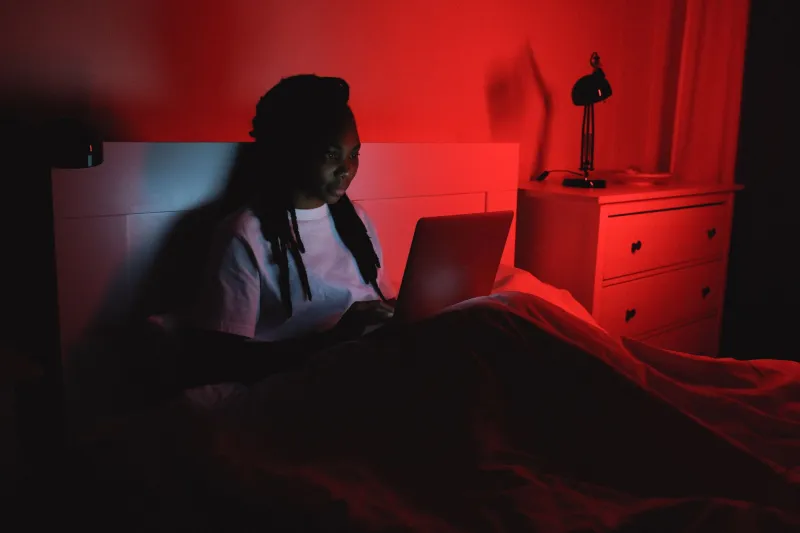
If you're someone who regularly finds yourself watching "just one more episode" well past midnight, you're not just giving in to insomnia — you're actually part of a legitimate and growing audience segment that platforms are actively courting.
The content being made for you has gotten sharper, weirder, and more interesting precisely because the creators making it understand who's watching. They know you're not a passive viewer. You're choosing to be up, you're choosing to engage, and you're choosing content that genuinely interests you rather than whatever happens to be on.
That's a fundamentally different relationship between creator and audience than anything primetime television ever managed to build — and it's why the 3 AM content goldmine isn't going anywhere anytime soon.
The networks had their era. The algorithm runs on a different clock now.